articles

The Medicare rebate freeze is here to stay. Despite the Federal Government announcing it had heard the electorate expressing their concerns about Medicare at the election the Prime Minister is ploughing on, claiming that savings must be made, that people should pay a copayment if they can, and anyway the bulk billing rate is going up so patients aren’t missing out.

Do savings need to be made?

Countries increase their spending on health care as they get richer. In the last decade Australia has increased spending on health care from 8.8% of GDP to 10%, a figure very slightly above the median for OECD countries (1).  Our budget deficit is lower than almost every OECD country.

Even if we decide to improve the deficit, it can be done with either increased revenue or decreased spending. There is ample scope for both approaches but the decisions do not amount to need, they are political, practical, and ideological.

Reducing government health care costs are not necessary but it is sensible to spend more efficiently and to save on unnecessary or ineffective care.

Government health care costs have increased by 52% over the decade (2). In that same period total general practice Medicare rebates have increased 35% (3).

They constitute just 5% of Government health funding. In 2005 the figure was 5.6%. It has fallen. The main drivers of government health care costs do not include general practice.

Other options for savings

The taxpayer funded Private Health Insurance (PHI) rebate has increased by 63% in that same period (4).

If the Government is really concerned about savings in the health care system it could start by paying world market prices for pharmaceuticals and saving $1 billion per year, freezing and gradually abolishing the PHI rebate, ($8 billion per year), addressing private and public hospital inefficiencies ($1 billion per year), and other savings as outlined by the Australian Health Care Reform Alliance (5).

The claim that the Medicare rebate freeze is about saving is deceptive and dishonest.

The second justification for the freeze is that those who can afford a copayment should do so. This argument centres on moral hazard (the danger that if a service is free at the point of delivery it promotes overuse).

The problem is that the Federal Government itself does not believe it. Thus, it happily supported a trial by Medibank Private to have their members not pay the copayment when they visited GPs. The Government also supports No Gap PHI policies which remove copayments.

The third justification (post hoc) is that the bulk billing rate has risen to an all time high of 83.7% in the July 2016 quarter despite the freeze being in place for 2 years. The Federal Government refuses to reveal precisely what items the figure covers (standard GP visits, health checks, medication reviews, case conferencing, etc). Thus, if there has been an increase in use of items which have usually been bulk billed anyway, the figure may be misleading.

Even if it is accurate, other factors may be pushing the rate up. Since 2005 there has been a 26% increase in the number of GPs per 100,000 people (full service equivalent) (6). Competition helps to control prices as the Federal Government would readily acknowledge and encourage. It doesn’t necessarily help quality.

Rebate freeze hits hard

Most GPs aim to provide a first class service but time and financial pressures are a reality. The rebate freeze will result in a 5% decrease in Medicare income for GPs unless they see more patients.

GP practices which have onsite pathology can be getting thousands of dollars rent to supplement their income, thereby enabling them to limit patient copayments, although the Federal Government plans to reduce that, thereby putting more pressure on GP income.

If GPs do not accept a pay cut forced on them by Government ideology the response to that can be new copayments for previously bulk billed patients, higher copayments for those already paying, reduced access to patients who are poor, and/or faster lower quality services. All of these options will make patients suffer.

GP copayments to patients have increased to $35 in June 2016, a 65% hike in the last decade (3). Patients vote with their feet when faced with increased costs. They may simply not attend the GP.

The Australian Bureau of Statistics survey indicates that 5% do not see a GP because of costs(7). They risk becoming sicker by not seeking care when they need it. This may ultimately cost them and the taxpayer more. They may attend a hospital Emergency Department, or go to a corporate bulk billing clinic if available.

But continuity of care is central to the management of many chronic illnesses, and is less likely to occur in corporate vertically integrated bulk billing medical centres or Emergency Departments.

Primary health care is accepted around the world as the most efficient and effective part of the health system if supported properly. The Government refuses to accept evidence.

Late on Friday 5th November the Health Minister’s department issued details of policy regarding the Health Care Homes initiative. No politician or senior public servant releases details of policy at such a time unless the hope is that it will not be noticed, lost in the 24 hour weekend news cycle.

It indicated that patients who enrolled for chronic disease management care would have to pay full price if they developed another problem eg leg ulcer that required more than 5 visits a year. The policy was rescinded as a mistake within days.

But it indicates that the Minister for Health or her department continue to have a cost cutting agenda without understanding the health system they are administering and without a care for patients.

The bulk billing rate has fallen in the quarter to September 2016 (3). It may indicate that the desired effect of the Medicare rebate freeze is finally occurring, or it may be a simple fluctuation in the figures.

Anecdotal reports of practices abandoning bulk billing and charging pensioners and health care card holders $30 are widespread. Copayments however just keep on rising, another $1.50 this quarter, following the 65% hike over the last decade, way above inflation. ))

The real agenda

The freeze was introduced to make patients pay. Making patients pay makes them more interested in private health insurance to help them afford payments. This is the real agenda, to gradually move away from our public health insurance scheme for everyone to an increasing reliance on user pays private health insurance. In 2009 the then Opposition Leader, Malcolm Turnbull stated on ABC radio (8)

“In an ideal world, every Australian would have private health insurance. That would be the best, that would be the best outcome.”

That has always been the agenda of the Coalition. It has pursued it relentlessly, sometimes rashly, often insidiously, pretending the agenda is otherwise.

The rebate freeze is one strategy in that agenda. Reducing the Federal Government’s share of public hospital funding is another. Reducing the support for public dental care is another. Promoting PHI in primary health care is another.

The challenge for the Government is to do it without scaring the vast majority of Australians who want Medicare to remain and be improved. That is all Mr Turnbull has learned from the Federal Election result.


  1. Australian Institute of Health and Welfare (AIHW) Health Expenditure Australia 2014-5
  2. Australian Institute of Health and Welfare (AIHW) Health Expenditure Australia 2014-5 Table 3.3
  3. http://www.health.gov.au/internet/main/publishing.nsf/Content/Quarterly-Medicare-Statistics
  4. Australian Institute of Health and Welfare (AIHW) Health Expenditure Australia 2014-5 Table 3.5
  5. Efficiency Opportunities in the Australian Health Care System: Position Paper http://www.healthreform.org.au/ .
  6. GP Workforce Statistics 2004-5 to 2014-5   http://www.health.gov.au/internet/main/publishing.nsf/Content/General+Practice+Statistics-1
  7. Patient Experience in Australia: Summary of Findings 2014-5 http://www.abs.gov.au/AUSSTATS/abs@.nsf/Lookup/4839.0Main+Features12014-15?OpenDocument
  8. ABC Radio PM – Friday, 15 May , 2009


articles

The intellectual stimulus for this article was the book ‘Utopia for Realists’   by Rutger Bregman. The emotional stimulus (tears and anger) was the movie ‘I, Daniel Blake’ directed by Ken Loach.

In 1970, conservative republican US President Richard Nixon introduced a health bill into the American Congress. It passed but was defeated in the Senate. He didn’t realise it was a health bill, nor did many of his fellow politicians. It was called the Family Assistance Plan, a guaranteed income for families with children, not adequate to bring the income up to the poverty line, but substantially more than was previously on offer.

It required the breadwinner to accept work if available. Thus it was targeted, conditional, and inadequate by itself to eliminate poverty, but it was a huge change in thinking from a conservative leader in the United States. It came with this impressive rhetoric

 “Initially this new system will cost more than welfare, but unlike welfare this is designed to correct the condition it deals with and thus lessen the long range burden and cost.”

The health-income gradient and the failure of ‘welfare’

We know that health and poverty are inextricably linked, that health outcomes follow the income gradient, and that the basis for this association in wealthy countries with good health systems is not simply access to care, but poverty and its own associations. Thus the Nixon proposal was a health bill.

The famous Whitehall study of British public servants who all had similar access to the National Health Service demonstrated a clear association of income and therefore of position in the public service with health outcomes. Those most in control of their own lives lived longer and suffered less.

Because of concern about wasting taxes on welfare and about the so called ‘welfare trap’, we have developed a highly targeted welfare system in Australia, with a strong emphasis on mutual responsibility. Our efforts to identify any welfare ‘fraud’, accidental or intentional, have become more intense.

We continue to force people to chase jobs which don’t exist or which they could not do. We hound them with letters generated by computers and then make it difficult for them to question any charges against them. We demean them. We disempower them even further than their poverty or unemployment or mental or physical illness already does.

A BIG idea

An alternative is needed. The concept of a Basic Income Guarantee (BIG) is not new. Thomas More wrote about it 400 years ago in his book Utopia. Variations of it have been advocated for centuries. Bismark’s social insurance in Germany has some elements of the concept. Nobel Laureate economist and free marketeer Milton Freidman advocated it in the form of a negative income tax (NIT).

Four trials in the 1960-70s in the United States used Friedman’s model (p 107-109). If the tax return indicated a low or no income, a tax rebate was paid as a monthly deposit to a bank. The size of the rebate declined slowly as income was earned, ensuring earned income led to an increase in total income. The largest of these four trials involved 4,800 families, and the amount given varied from 50 to 100 percent of the poverty level. There were no work requirements.

The alternative model to NIT is a cash payment. This was trialled in Canada in 1974, where 60 percent of the Low Income Cutoff (poverty level) was paid. For every dollar earned the payment was reduced by fifty cents. Analysis of results showed that even though only one third of the population ever qualified over the 4 years of the trial, high school completion results increased and hospital admissions decreased during the trial compared to the control group.

An even more simple model is one in which the cash payment goes to every individual adult and is not means tested. This eliminates any negative perception of being needy, because everyone receives it. For those who don’t need it, the money can easily be recouped by changes in taxation.

Counting costs, reaping benefits

The Basic Income Earth Network established in 1986, defines a basic income guarantee (BIG) as “a periodic cash payment unconditionally delivered to all on an individual basis, without means-test or work requirement”. This doesn’t specify the level of the cash payment but the simplest and likely the most effective would be to make the level at or slightly above the poverty line.

Concerns about the basic income guarantee relate both to the benefits and the costs. The Canadian trial mentioned above, demonstrated both health and education benefits. Analysis of the effect of increased household income in the Cherokee Indian community as a result of distribution of profits of a Cherokee owned casino showed less criminality and improved education down the track. None of this is surprising.

But doesn’t it mean people won’t work as hard? The US trials referred to previously showed a definite decrease in hours worked especially in women and young adults. Is that bad? It isn’t clear from the data what they did instead of working so much. Were women spending more time looking after their families? Were young adults looking more carefully at work options and training?

Men reduced their work hours by about 6% but it didn’t appear that they were permanently unemployed. Rather, it appears they were spending more time between jobs. The sky did not fall in. Most people who can earn a little more than a poverty level income will do just that.

Is it affordable?

A basic tax free income guarantee of $22,000 (the poverty line at 50% of the median income for a single person) for every adult Australian (18 million people) would cost $400 billion a year. But the idea is not to increase the net income of millionaires by $22,000. It keeps it simple however, to give to everyone and recoup in taxes from those who definitely don’t need it. So the real cost is much less.

Only about 6 million Australians currently receive income support. Another 1 million or so have some funding from the Federal Government. Being generous, for 8 million to receive the BIG would cost $176 billion, almost completely offset by replacing the welfare budget of $150 billion. That would be abolished.

Removing the tax free threshold of $18,200 for the 12 million earning more than that would generate $41 billion. But anyone on a low income would still have a total income of more than $22,000.

Tweaking the tax rates on higher incomes would effectively remove the BIG from higher income earners. Provision for children would add to the cost. Reducing BIG for dual income households to a level which would reflect economies of scale, in the same way as pensions do currently, would reduce the cost.

Most Australians would not lose a cent. All Australians would be guaranteed a basic income, whether sacked, disabled, unable to find work, or simply unemployable. The NDIS and Medicare would continue unchanged. This is all possible.  Even the Productivity Commission thinks it’s worth investigating (p69):

“While Australia’s tax and transfer system will continue to play a role in redistributing income, in the longer term, governments may need to evaluate the merits of more radical policies, including policies such as a universal basic income.”

A bold move for health

If Australia introduced BIG we would have a system that almost eliminates poverty, thus appealing to those deeply concerned about the plight of the disadvantaged. We would also have a system which gives such people the genuine capacity to make their own decisions about what they do with their lives, which should appeal to those committed to individual responsibility.

Implementing this idea would do away with the current cruel, disempowering, wasteful welfare system. It would improve health outcomes. It could improve productivity. It would improve the life prospects of the 13% of Australians who currently live in poverty, the 17.4% of kids who are being raised in poverty, and the 40% of children in lone parent families who live in poverty.

This is a health issue. Medical groups of all types should think about how we might use our knowledge and concern about health to bring this issue to the minds and actions of our politicians.

* Dr Tim Woodruff is president of the Doctors Reform Society, an organisation of doctors and medical students promoting measures to improve health for all, in a socially just and equitable way.

articles

On an almost weekly basis now I’m asked as a medical specialist to write a letter to help a patient be accepted by Centrelink as unable to work. My letter and that of the patient’s general practitioner are then assessed by staff with limited or no medical training.

Many have their request declined and are therefore required to attend Centrelink fortnightly, and to apply for jobs they can’t do – even if such jobs exist.

One man had his request accepted only after he was admitted to hospital, despite hobbling on a walking stick, and taking narcotic analgesics.

Something is wrong with how we try to help our struggling and most vulnerable fellow Australians.

What is wrong with the welfare system?

The Federal Government’s cost saving measure, the Online Compliance Intervention (OCI), an initiative which included computer generated letters to clients requiring them to submit evidence of their entitlement and suggestions they might lose benefits, was the subject of an inquiry by the Senate Community Affairs References Committee.

The Labor/ Greens dominated Committee found major problems, but even in the dissenting report from Coalition Senators:

It has been widely acknowledged by the Government that the initial rollout should have received more robust planning and consideration of the impact…

…acknowledge the evidence given by some recipients from the early stages of the OCI rollout about the confusion they experienced in being advised of a debt and in providing the information requested.”

Targeting

But even before OCI, our welfare system has depended on targeting to ensure that people were not accessing benefits to which they were not entitled.

We have a highly targeted system. The poorest 20 percent of the population receive the highest percentage of welfare of any OECD country.

Whilst the theory is fine, the practice depends upon the most disadvantaged members of our society complying with requests that even I would find somewhat daunting.

A single mother with no income, no assets and dependent children could be eligible for a Child Care Benefit, a Family Tax Benefit, a Newborn Upfront Payment and Newborn Supplement, a Parenting Payment, and possibly Rent Assistance.

She would need to identify all of the above, apply for them, and then comply with the rules regarding continuation of payments as appropriate. If she left school at age 15 after five years of being totally disengaged with school anyway, that would be challenging.

Newstart

Then there’s Newstart. At $14,000 yearly, it is $8,000 below the poverty line. It has been kept low by both major parties in an effort to encourage individuals to get a job.

But people who find themselves poor make poor decisions. Laboratory and field experiments on cognitive ability suggest that being poor of itself might contribute a 13-point decrease in IQ.

Added to that is the ‘poverty trap’, whereby people who get a job lose benefits and end up no better off despite going to work. We can and should do better.

Then there are the thousands who don’t access the benefits to which they are entitled because they’ve tried and found it too difficult, or they aren’t aware of their entitlements, or they don’t want to admit to needing welfare, or other reasons.

In 2010 the estimated take-up for the UK Child Tax Credit was only 83 percent. More than one million (1.2 million) eligible families were missing out.

Previous estimates across Western Europe found uptake of different means-tested benefits ranged from 30 to 75 percent (see p. 211 of this book, Inequality).

Distressing, demeaning, disempowering, and unhealthy are all appropriate adjectives to categorize the effects of our welfare system on our most disadvantaged fellow Australians.

A better alternative

The alternative, a basic income guarantee (BIG), is now being trialled in Finland, Canada, The Netherlands, and Scotland.

The results from these trials will add to the considerable information already available from the trials in the USA and Canada in the 1970s, referred to in my previous article at Croakey.

What happens to people’s capacity to make good decisions about jobs and increasing their income if, instead of a pittance, they start with a poverty line income?

The evidence presented in my previous article suggests that they try to improve their circumstances, to move off the poverty line, to get further education, commit less crime, perhaps spend more time with their family, helping aging relatives, involving themselves with the kids’ school and other activities, and they are more healthy. There is no evidence to suggest that they put their feet up and loll in the joys of living on the poverty line.

Inevitably some might feel that the country owes them, but we see similar thinking from the rich and powerful – including many former politicians who can be found with their snouts in the trough and a sense of entitlement.

Where opportunities exist, greed and entitlement will manifest. Those so inclined are the minority.

Whilst many proponents of the concept suggest that a BIG is not means tested, the reality is that it has to be paid for and, to do that, taxes have to be increased.

A basic income is guaranteed, but if you don’t need it, you won’t get it, despite it being paid into your bank account monthly, because a readjusted tax system will take it away from those who don’t need it as soon as it hits the bank account.

Effectively those with no need end up with nothing. Instead, it is means tested on the basis of taxes on income and/or assets of those who don’t need it.

Thus, instead of mean means testing by Centrelink, the tax office does the means testing, and once the tax changes are made, the cost of means testing and all its negative aspects are gone.

Savings

In 2012 Catholic Health Australia commissioned the National Centre for Economic Modelling to assess the cost of not addressing the social determinants of health.

The report concluded that there was $6.7 billion in potential savings from decreased welfare and health costs and $8 billion in extra earnings if these factors were addressed. A significant proportion of these gains would be addressed by a BIG, lifting almost every Australian’s income to the poverty line.

Additionally there would be some savings from Centrelink administration, which costs about $4 billion yearly. Most of this is spent on administering welfare payments. Some is spent on service provision and would need to continue.

More money needed?

Whilst relatively simple tax changes can generate most of the funding required as discussed previously, further investment in this concept may be needed.

The Treasurer, Scott Morrison has indicated that the ALP proposals regarding negative gearing, capital gains, company trusts, superannuation, and high income deficit levy would cost taxpayers $100 billion over 10 years – about $10 billion a year.

For those genuinely interested in improving health and thereby productivity, using such funds to support a basic income would be seen as an investment. In addition, the Federal Government is looking seriously at companies that manage to minimise tax (Apple, Google, Pfizer) and is expecting about $2 billion in extra revenue as a start.

Improving our investment in the six million or so Australians who cannot earn an adequate income can improve their health and education.

Optimising health and education is not just about social justice. It is also about productivity as the Productivity Review 2017 has indicated:

…there are also significant opportunities in prospect (for improved productivity). And they lie in areas that many would not traditionally associate with productivity: health, education, cities and confidence in institutions.”

There is a prima facie economic case for the affordability of investing in a basic income guarantee. The details are for economists and public policy experts to address.

Hurdles

Arguments against such an idea from the ALP are disappointing and seem disingenuous at best, suggesting millionaires shouldn’t be gifted money.

Unions have varying views on the concept, ranging from a strong interest in investigating further to suggestions it is useless.

Fundamentally, BIG has the potential to empower workers to reject a job with terrible conditions, move to a job that is more suitable, tell an unreasonable employer that he can find someone else, and empower unions to advocate more easily for their members.

It’s time to question targeted welfare.

It’s time for health professionals to ask politicians to think with a little more vision about investing in the social determinants of health, not only because of concerns regarding social justice, but also because this is an investment in productivity.


articles

One of my patients has epilepsy. She sees a neurologist for that and he charges $200 out of pocket per visit. He has controlled her epilepsy very well. She is on a disability support pension. She believes she will get better care seeing him privately despite the fact that he also works in the public system.

Out of pocket (OOP) costs have been in the news particularly since the ABC’s 4 Corners program exposed huge costs impacting significant financial hardship on many sick Australians. As a result of a Ministerial Committee report the Health Minister has proposed tackling the issue with a website of specialist charges and an education campaign for patients. The Committee consisted of ten health care provider representatives and one consumer representative. My suggestion to the Minister that more consumer representatives might be appropriate resulted in an intensely angry response.

The effect of OOP costs

OOP costs affect patients in two ways. They either cause financial hardship or they stop patients using the service. The 4 Corners program and everything that has followed have concentrated almost exclusively on the former which have indirect effects on health through stress but don’t affect medical care.

There is a 6 month waiting time to see an arthritis specialist at my hospital. This scenario is typical of most public hospitals. Some of these patients’ lives are endangered by this delay. Many suffer unnecessarily. Waiting times for elective surgery around the country can be years. The patient may not be able to work for that time or may be dependant on their family and require narcotic analgesics through that time, but if the problem is deemed not life threatening or progressive, the lowest urgency rating applies. They wait.

Patients wait for both specialist outpatient appointments and elective surgery because they can’t afford the OOPs. For surgery the biggest cost is the Private Health Insurance premium, which is beyond the capacity of the majority of Australians. These patients whose health care needs are not being met have been largely ignored despite the talk of OOP costs and the limited action planned by the Federal Government.

The different types of OOP costs

There are two types of OOP costs which stop patients accessing services adequately. The first is government imposed. The most striking example is the $40 prescription co-payment for a month’s supply of a single drug. On $40,000 a year with three scripts a month that can and does lead to patients not filling out prescriptions. Thus in 2017, 7% of Australians delayed getting or did not get a prescription drug according to the Australian Bureau of Statistics. Not taking prescription drugs which are subsidised by the Government because they save lives, means some people will die because of that co-payment. Others will suffer unnecessarily. On $4 million a year, a banking executive will face the same co-payment. He will not be affected. Such co-payments represent a regressive tax on illness.

The second type is that imposed by health professionals, mainly doctors. This is determined by the health professional and the size of these co-payments reflects a mixture of the financial needs of running a practice or small business, the sense of worth or entitlement of the doctor, the amounts colleagues charge, the amount the Australian Medical Association recommends, and competition. Successive Federal Governments have avoided testing the Constitution as to whether it is legal for Government to put any conditions on receiving the Medicare rebate e.g. fix the co-payment at a certain level. It could be tested.

The importance of a strong public sector

Competition can be a very effective tool for controlling prices in health care. Improving quality however is probably better served by co-operation. The single greatest competitive threat to the private sector is a strong public sector. Since the Howard Government, there has been a progressive intentional weakening of the public sector relative to the private sector, which itself is heavily subsidised by taxes. The aim has been to relegate the view of the public system to that of a safety net.

The alternative is to restore that belief that our public system is there for everyone, truly universal, and that we need to resource it with both better policies and adequate funding. Imagine public specialist outpatient waiting times of about a month. Imagine public elective surgery waiting times of about three months. Patients who now suffer because they cannot afford private care would receive the timely access to care they deserve. Patients who now suffer financial distress as the victims of the flawed private sector could vote with their feet or threaten to do so, and one would see private charges fall across the country. There would still be those who want a single room with a view over the park, the convenience of choosing the date of surgery, and choice of doctor.  They would be free to pay.

Two recent articles on this topic highlight the limited nature of the Federal Government’s approach to the issue of OOP costs and make many valuable suggestions to better address the problems of financial distress and delayed access to care due to OOP costs. The emphasis in addressing these issues must be on delayed access to care, not fiddling with the private system to address financial distress.

Labor’s position

To that end, it is encouraging to see that Labor has promised their permanent Health Reform Commission will have priorities of increasing specialist access in public hospitals and improving chronic disease management. There are many other areas where public health services are desperately in need of improvement. We need investment in our public system. Then we could see how many specialists can still get away with causing financial hardship as they live the lifestyle to which they have become accustomed.

What we need

We currently have universal access to an inadequate rebate for medical care, and access to public hospital care and dental care years after it is needed. We should be aiming for a system which provides universal access to timely health care. That is what a publicly funded health system can do. Improving private health care for those who can afford it is not the answer.

articles

The Opposition Leader has announced the biggest investment in Medicare for a generation, $2.3 billion to be spent eliminating the co-payments faced by those with cancer who see specialists, need diagnostic imaging, and radiotherapy. It is also guaranteeing all new drugs approved by the Pharmaceutical Advisory Committee (PBAC) will be listed for subsidy. The latter means prescription costs will be a maximum of about $6 or $40 a month for pensioners and health care card holders or non card holders respectively.

Cancer is scary. It is debilitating. It is life changing. It is often fatal. Furthermore, as Mr Shorten correctly pointed out “cancer makes you sick and all too often makes you poor”. Labor is to be commended for addressing this challenging issue.

Implementation Issues: Specialists

How will it work and are there any potential negative impacts of such a policy? It is proposed that the Medicare rebate to see a cancer specialist or surgeon will be increased possibly by about $80 on the proviso that the patient will be bulk billed. If the increase in the rebate is much less than what the specialist currently charges, it is likely nothing will change. My neurologist colleague who charges a $200 co-payment for a review visit for a pensioner is unlikely to bulk bill if the rebate increases by $80. Specialists decide what gap fees they charge. Labor hopes that competition will then work to prevent or minimise this. Competition between specialists is very limited. In regional and rural areas where there are such specialists, it is often a choice of one. Specialists decide how much they charge on the basis of a variety of factors including patients’ financial situations, practice costs, the failure of the rebate to be adjusted for inflation over many years, the specialist’s own sense of entitlement, and what colleagues charge. None of these will change under the proposed scheme.

Then there is the very strange situation of an oncologist being paid more than a similarly trained cardiologist or other specialist who delivers the same high quality service but receives less because he/she has picked the wrong specialty.

Implementation Issues: Diagnositic Imaging

There will also be increased rebates for diagnostic imaging with the same aim, that they will all be bulk billed. The same concerns apply. Co-payments for MRIs are frequently many hundreds of dollars. It will also result in the ridiculous situation that a radiologist reporting an MRI of a cancer patient will be paid more for that report than his/her next report on a patient with kidney failure, even though identical skills are required and indeed the report might even be identical.

Another concern with this proposal is the potential cost blow out due to overservicing. Some doctors might say ‘I might just get an extra ultrasound or MRI as it might help and won’t cost the patient ’, even though his colleagues would say it is not necessary. Will the radiologist sometimes say when reporting a CT scan ‘I recommend an MRI’ whilst the next radiologist says it is quite unnecessary? Some degree of overservicing is inevitable in a fee for service model. How much of a problem that might be with this proposal is unknown.

Implementation Issues: Expensive Prescription Drugs

The other major plank of this proposal is that all drugs recommended by the PBAC will be approved for subsidy. The pharmaceutical industry executives will probably vote Labor just on that alone. It’s a blank cheque and despite protestations by the Shadow Minister that there would be hard bargaining, that happens already and in a recent Sky television interview she had no suggestions about how she would prevent a cost blowout. When one has stated that a drug will be approved quickly, the seller calls all the shots.

Alternatives

But there is another curious aspect to this policy. Our public hospitals provide timely access to world class care for those with immediate life threatening conditions like cancer. Prescription costs are probably the biggest challenge for them and there is no suggestion that they will be eliminated. The patients targeted by Labor’s policy who are affected by the huge out of pocket costs have chosen to seek care privately for a multiplicity of reasons. One is the wish to go to a doctor of their choice. This is very understandable especially for some of the common cancers like breast cancer. However, such choice is currently denied to those many Australians who know from the start that they can’t afford private. Another is a wish to be involved in a drug trial offered by private oncologists. These can and are run in and by public hospitals and universities, avoiding out of pocket costs. Another is a belief that private is better despite the complete lack of evidence except in terms of timely access for elective treatment. But cancer treatment is not elective in either public or private systems. The belief that private cancer treatment is better is thus a myth fostered by the current Government which wants us all to see public care as a safety net.

Treating Patients, or Treating Diseases?

Whilst cancer is the leading cause of years of life lost in Australia, our patients suffer and die from heart disease, strokes, kidney failure, diabetic complications, arthritis complications, asbestosis, mental illness, suicide, motor neurone disease, multiple sclerosis and many other treatable and often preventable conditions. As doctors we see the lot. Cardiovascular disease is the leading cause of death. Mental illness is the leader when it comes to years of quality life lost. Patients without cancer often suffer as much or more than cancer patients because they live longer. To ensure excellent affordable access to care for patients who suffer from cancer is fantastic. To deny similar access to all the other patients with the many causes of pain, suffering, and death is an insult to doctors and their patients. It goes against every principle which guides our profession. We treat patients, not diseases.

Politics or Policy: Which is Dominant?

This policy may be very helpful for those who wish to access private care. It will have minimal impact on those cancer sufferers who use the public system. It will have no impact on those who struggle with the delays and costs for non cancer illnesses. It is worth noting that Labor has flagged an increase in specialists of all kinds in public outpatients which is to be commended. This cancer policy may work but at what cost as it is rolled out? It is divisive and inequitable. It may be good politics. Is it good policy?

articles

Health policy reform is difficult. There are an abundance of powerful stakeholders whose number one priority is definitely not optimum health care for all Australians. But most Australians do share the view that our health care system (which isn’t really a system) needs improving. There are two broad aspects to optimising health. The first is equitable timely access to high quality care. The second is addressing all those factors outside the health system which affect health. These are the social determinants of health and of productivity. Healthy people are more productive. The key social determinant is income inequality, both absolute and relative.

Social Determinants Now

What could be done immediately following next month’s election to improve health and productivity? A good start would be an immediate increase in the Newstart Allowance by $75 from the current level which is 40% below the poverty line. From the Australian Council of Social Services (ACOSS) to the Business Council of Australia there is a call for such an increase. The only significant group of people who seem to be resisting the idea are politicians. It would send a clear message to Australians that punishing the unemployed is not right. It could easily be sold as both a health and productivity measure. Nearly a million Australians struggle on this inappropriately named ‘welfare’ payment.

But income inequality as a determinant of health and productivity is not confined to those on Newstart. Relative income inequality, the difference between those on $40,000 and those on $4 million also makes a difference. The degree of income inequality in wealthy nations correlates very well with measures of health and social problems. Australia ranks well above average in terms of income inequality in OECD countries (ACOSS Page 31). Productivity is threatened by the degree of income inequality, according to economists from the International Monetary Fund. It therefore makes sense to have tax reform which attempts to redress the trend to greater inequality which we see in Australia over the last 15 years, particularly with respect to wealth (ACOSS Page 22). Labor is to be commended for moving in the right direction.

Access Now

What else could be done almost immediately? Fourteen percent of sick Australians on below average incomes delay or don’t fill prescriptions because of cost (Commonwealth Fund 2014 Page 24). Many of these drugs such as cholesterol lowering agents and blood pressure tablets save lives. That is why they are subsidised. The Federal Government whether Labor or Coalition imposes co-payments, which are essentially regressive taxes on illnesses. It’s time to reduce these co-payments so that no one misses their medications because of cost. This can be done immediately.

Access to specialist is also a problem. Patients either don’t see specialists when they should, go broke seeing specialists who have scant regard for their patients’ financial and therefore emotional well being, or wait months to years to see public hospital specialists. An immediate quarantined funding of specialist public hospital outpatients would change all that and patients with the full spectrum of diseases would benefit. This is in contrast to the focus on cancer patients outlined in Labor’s discriminatory cancer policy plan. However Labor is to be commended for its proposal regarding specialist public outpatients even if little detail has been given.

There is an Aged Care Royal Commission. Last year an inquiry into a proposed bill on aged care staffing recommended publication of staff ratios and a minimum of one registered nurse on duty all hours. Then the Government effectively stopped governing as it didn’t feel it was in control of Parliament. The recommendations and the bill are therefore awaiting a new Government. The recommendations are a first step and could be implemented immediately.

Hospital funding is a perennial issue. Labor has now promised a return to matching the States for the costs of running public hospitals, the so called 50:50 split. It is unclear whether this refers to new funding or to total funding. Their policy when last in government related to new funding which means it will be a decade or two before Federal funding matches State funding. Nevertheless, it is also a first step.

The Long Term

However, these issues and many others reflect the chaos of our so called health system. There is no overarching vision of how our health system should work. Politics in a federated system means chaos, division, the blame game, and lost opportunities.

A Productivity Commission assessment of private health insurance (PHI) has been proposed by Labor. It is welcome if and only if it is asked to address the efficiency and equity issues relating to taxpayer funding of PHI. Otherwise it is an exercise in futility designed only to benefit those who can afford PHI, whilst ignoring the rest of the population.

Labor has suggested a permanent Health Reform Commission but its proposal lacks two essential ingredients, if such a commission is to provide a way forward. The Commission must be independent of all the stakeholders whose prime interest is not patient well being as proposed on this blog. These include governments, the Australian Medical Association, the Pharmacy Guild, and the pharmaceutical, private hospitals, and private health insurance industries. It must have power to implement suggestions as I have described previously. Thus if it initially is responsible for all new health funding, it can distribute that funding to where it is needed by patients, not to where it is politically advantageous, or to where it will placate a powerful provider lobby group. Over time it could rationalise and assume responsibility for current funding. An advisory body will be ignored whenever the advice does not suit.

Such a body can then grapple with the many major gaps in service provision which include dental care, mental health reform, primary health care, prevention, and Indigenous health. It can also address the major problems of poorly integrated care and direct funds to where evidence shows it may work. It can fund the collection of data which is essential for its own work. It can point the way to addressing the social determinants. The issues are well recognised.

Whilst politicians cling to the same way of doing things as they have to date, we will not see the improvements in our health system which are possible and which every Australian deserves. The suggestions above can be sold as a way to increase health and increase productivity, which would appeal to almost all Australians. Can a progressive government grasp the opportunity and step forward with a new way of getting complex change to occur in a federated system riven with powerful lobby groups? We live in hope. We hope for our patients.

articles

The recent election result was a major disappointment for those interested in improving the health of the nation. The re-election of the Coalition promises an ongoing increase in support for private health insurance as the Government continues its long-term agenda of two tiering the health system.


Under the Coalition the public health sector is seen as a safety net and those with a well paid job or high income should use the private health sector. Labor’s health agenda remains unclear. Some of its policy may even have resulted in the same or even increased support for the private sector at the cost of the public sector. Its key service delivery proposal was for cancer and may have been good politics but
was grossly discriminatory poor policy.

Whilst there was disappointment amongst advocates for health reform, I think there are two important and somewhat reassuring aspects to the result which bear scrutiny. Firstly, as with most elections, the swings were generally not massive, nationally a 1.5% swing from Labor to Coalition. Secondly, the swings in wealthy electorates were not away from the redistributive agenda of Labor. This would suggest that such voters were considering a much bigger agenda than their own short-term interests. Whether the bigger agenda included climate change policy or a more equitable health and education agenda or other factors is unclear but probably quite varied.

At the other extreme however were those in lower socio-economic electorates. Labor lost them. It is hardly surprising that people who struggle with a weekly budget, who don’t even dream of Private Health Insurance (PHI), who worry about jobs, who live in fear that they too will be trying to live on a Newstart allowance 40% below the poverty line, would be more interested in how a government would impact their daily lives now, rather than five years or a generation down the track.

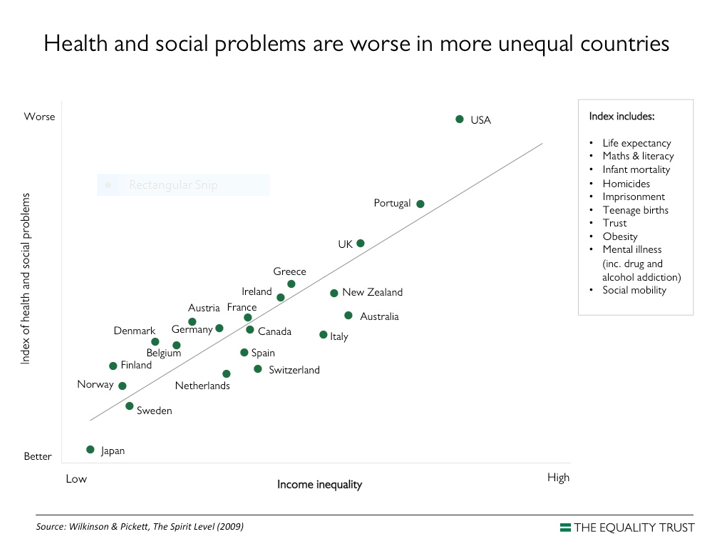
The health of a society and its individuals depends on two factors. Firstly, affordable timely access to high quality health care. Secondly, addressing all of the factors outside of health which impact on health. These are the social determinants of health. Central to health and wellbeing in a society is relative income inequality as much research and this graph show (see slide Health and social problems worse in more unequal countries) .

Labor’s Health Policy

Central to Labor’s policy was reform of various tax exemptions which one would expect to lead to decreased inequality. Whilst health reformers would appreciate that decreased income inequality could of itself lead to improved health outcomes, such a claim would not be understood by many voters. Labor’s claim however, was that its tax changes would mean more money for increased services particularly in health and education. It proposed a significant boost to public hospital funding and to dental care for aged pensioners, both of which voters could have appreciated. Opposed to these however were the many other issues of concern to voters especially in the setting of a well constructed fear campaign.

Labor’s signature health policy proposal was a huge injection of funds to improve access to health care for patients with cancer. Its intended market was the one in two Australians who have cancer or have a relative with cancer. It either wasn’t interested in or failed to realise that patients who don’t have private health insurance use the public system where there are generally no costs for consultations, investigations, or treatment. If the cancer is life-threatening there will be minimal delays for treatment unlike so many other conditions treated so well in the public system. For political purposes it chose to discriminate in favour of those with cancer but against all those patients with serious life changing diseases which are not cancer and who don’t receive timely access to public care. The policy may have contributed to the positive swing in wealthy electorates. It probably didn’t register in working class electorates.

Labor’s proposed Productivity Commission inquiry into Private Health Insurance (PHI) may have been of interest to those who can afford PHI but would have held
little interest to the majority of voters in working class electorates most of
whom probably can’t afford PHI. The suggested terms of reference (TOR) of the
proposed inquiry indicated the central interest was to improve the value of the
product. The TOR did not explore the gross inefficiencies and inequities
inherent in taxpayer support for the 45% of Australians with PHI at the expense
of those dependant on the under-resourced public system.

Labor also proposed a permanent Health Reform Commission. On the surface this might suggest it had a vision for genuine reform. But like the previous Health and Hospitals Reform Commission under the Rudd Government, the terms of reference and construction of the committee meant it would be a powerless possibly politically compromised purely advisory body with no capacity to deal with the huge challenges of the inequities and inefficiencies of our unbelievably
complicated so called health ‘system’. It was never a vote winner.

Health Reform: Which Direction? 

Health care reform is challenging, especially from a Labor party with such a diversity of views. The Coalition has managed to reform the health system over the 25 years since the election of the Howard Government. They have tried to make big changes and failed. Instead they have gradually decreased their share of funding of public hospitals with the specific long-term goal of changing people’s perception of the public system from a service for all to that of a safety net, thus increasing people’s reliance on the private system. Labor lacks a clear vision, unable to decide how to balance the private/public division of health care. It has resisted the big changes the Coalition wanted (co-payments for doctors’ visits) and objected to the under-resourcing of public hospitals and dental care. But it has never clearly announced policies which would ensure that we move to an integrated health system with universal access, an emphasis on primary health care, and a recognition of the social determinants of health.

We do have high quality health care in Australia. It is not available to all. It could be so much better if issues of equity, efficiency, and prevention were properly addressed. That requires vision, belief, and political skill. The combination is not seen in the major parties. We must continue to push for such vision but, in the absence of such vision, those interested in reform must continue to advocate for incremental change for equity whilst resisting the ongoing divisive policies of the Coalition.

articles

How do we keep our population healthy?  From a patient perspective we don’t have a health system. From a provider’s perspective we don’t have a health system.

The nightmare for patients consists of multiple poorly connected pieces: the public hospital system, the publicly subsidised private hospital system, the GP system, the publicly subsidised private specialist system, the community care system, the publicly funded private allied health system, the private mental health system, the public mental health system, the private dental system, the publicly funded private dental system, the public dental system, the Aged Care system, and a myriad of other pieces.

From a provider’s perspective, let me describe how it is. Equity and efficiency are not part of the plan. There is no ‘system’.

As a rheumatologist I see patients with muscle and joint aches and pains. I want them to see a physiotherapist or a podiatrist. If on a good income they can afford to go privately. If not, they have to return to their general practitioner to get a ‘care plan’ which gives them up to 5 subsidised visits. Then it’s full price. They can try the local community health centre if there is one, and hope they are seen within 3 months. Or they can suffer.

I see patients for whom stress and/or past traumatic events make an important contribution to their ongoing pain. I want them to see a counsellor or psychologist. The situation is the same as for the physiotherapist. I suggest Tai Chi. But it’s unaffordable or unavailable. Their preventable pain and distress continues.

I see patients with multiple issues managed by 3 different specialists and a different GP at almost every visit to their large corporate general practice. Communication between the specialists is often good but not always. Good GPs can hold the picture together, but if the specialists are poor communicators the GP is up against it.

I see patients discharged from hospital where the drugs I have prescribed have been stopped, sometimes with good reason, other times without. I am rung often by the hospital doctors, but not always and usually by the most junior doctor who frequently doesn’t understand the issues. Sometimes I receive a discharge summary. Often I do not. When I do, it is frequently a 6 page proforma screed prepared by the junior doctor which, if summarised by a competent senior doctor on the team, would fit on 1 page and be so more informative. The same happens when my patients are seen in hospital clinics. Nothing, or 6 pages of repetitive waffle which could be summarised in 2 paragraphs.

My patient needs a hip replacement. “Should I go privately?” is the question put to me for those who may be able to afford it. There is no correct answer. It’s not even a question for many.

Recently an elderly regular patient of mine attended and I consulted My Health Record (MHR) to see if she was still getting her prescription drugs as she wasn’t sure what she was on. Her record was empty but it was there. MHR was set up to facilitate communication. Less than 10% of doctors are reported to be using it. Most specialists have not even registered for it.

Primary Health Networks were set up in 2015 to improve efficiency, effectiveness, and co-ordination of health care. Most GPs have had their first interaction with them only since the COVID pandemic because they were supposedly the source for Protective Personal Equipment.

I treat thin weak bones i.e. osteoporosis. It’s recommended a patient have a dental assessment before I start specific drugs for the condition. Should I withhold treatment for the 3 years it will take to get a public dental appointment. The mouth is part of the body, but governments ignore this fact.

My patient needs a nursing home. The nightmare begins. Potluck if you are on a low income or sadly if you can pay but are not sufficiently financially literate to understand the financial details.

The health ‘system’ appears to be currently structured so as to centre on providers rather than patients and to advantage the well resourced, health literate, independently capable patients. We health providers work in silos. We are funded to work in silos. Whether it is the individual GP, specialist, dentist, allied health worker, or the bigger silos of private hospitals, public hospitals, nursing homes, community health workers, mental health workers, social workers, and psychologists.

For the patient it is a disaster waiting to happen. With sufficient money and support from family, they do often manage to negotiate the maze and connect the silos themselves. Examples of first class co-ordinated care abound, particularly for example in cancer care. But there are so many exceptions.

Who and/or what is responsible for this maze of poorly connected health services which often barely manage to work together to provide health care of extremely variable quality depending on many competing variables such as income, geography, ethnicity, culture, and type of illness?

Funding is paramount. Siloed funding does not facilitate co-operation, co-ordination and integration. Divided funding (Federal/State) ensures divided responsibilities and denial of accountability. State run hospitals live in a different world from Federally funded GP care with notable exceptions.  It has always been thus. It does not need to be.

It is not that we necessarily need more funding. We need to direct it to efficient and effective services on an equitable basis. The existing Australian Commission on Quality and Safety in Health Care can provide the information regarding such services, but the question of equity is different, and needs to be addressed separately. To address the problems of responsibility and accountability the funding needs to be in the hands of an independent single funder of all health services. This would set the scene for new models of care which could have patients rather than providers as the central focus. It would quickly highlight those areas of chronic underfunding like mental health and dental health. It would recognise and be able to expose and have addressed the amazing variability in costs of identical procedures in different hospitals (Duckett). It would see an end to the duplication of services. It could result in savings estimated in the billions. Data and evidence would be central to its capacity to fulfil its task.

Politicians would decide the size of the health budget. Priority setting however, would be decided independently on the basis of evidence. Lobby groups would be successful only with evidence. Marginal electorates may well miss out. Health providers would have the opportunity to work together in an environment where the central focus is total care of the patient, rather than just fixing a single isolated problem. We do work as teams often. We do not do it enough. Our patients want and deserve more.

Health is a state of complete physical, mental and social well-being and not merely the absence of disease or infirmity.(WHO). We need a health system, not a maze of poorly connected health services.

articles

Much has been written about the problems of the Private Health Insurance (PHI) industry. Desperate attempts to make an inherently inefficient product less inefficient have been proposed. Such suggestions do nothing for the inherent unfairness of taxpayer subsidised PHI. But something needs to be done and it should address both the inefficiencies and the inequities.

Private Health Insurance enables patients to bypass the public hospital queues, particularly for elective surgery. Taxpayer support for PHI through the 30% rebate means about $11 billion is not available to be spent on the public system where the needs are greatest. It gives those who can afford PHI a choice of doctor and perhaps timing of their admission. There is no evidence it gives better care except for timely access to elective surgery.

Claims that PHI in Australia is in a death spiral ignore reality. PHI can exist even when it only covers 10% of the population as occurs in the United Kingdom. In 1996 the cover in Australia had fallen to 29% which is what forced the Howard G to act. But that was not done to save an industry. It was done to challenge our universal public health insurance scheme (Medicare) and to emphasise the Liberal/ Conservative values of choice and the benefits of high incomes. PHI could be in Australia what it is in the UK, an expensive private insurance product for the wealthy to use to choose their hospital and doctor, the timing of admissions, and the quality of non medical ancillaries such as the view from the hospital bed. In the presence of a strong public sector it would thus no longer give the insured faster access to appropriate medical care.

Option 1

To date two moderately detailed suggestions have been proposed to address the issues as discussed by Jackson here. The first is Medicare Select, an option put forward by the Rudd Labor Government’s Health and Hospitals Reform Commission which was headed by a PHI company executive. It is a form of managed competition. Competition between insurance companies doesn’t work now. Can it be made to work? It requires abandoning Medicare as we know it and is thus a very unlikely political option.

Option 2

The second option is an expansion of the Medicare Gold concept put forward by Labor at the 2004 election. This is a scheme whereby private hospitals are used for public patients, funded through taxes for each admission in the same way public hospitals are currently funded.

Option 3

There is a third option. It is to adequately resource the public system. It was dismissed in Jackson’s article on the grounds that doctors and perhaps patients would object. Some doctors will see a decline in the private industry as an attack on their autonomy and income. The same objections were raised prior to the introduction of Medibank (the original Medicare) in 1975. It didn’t matter. Some patients may bemoan the lack of choice. Even in private, choices are usually on the advice of their referring doctor who decides as much or more on who he/she knows as on the quality of the specialist.

Expanding the public system can’t be done quickly. Public hospitals have inadequate capacity. Twenty years ago however, when the Howard Government began under-resourcing the public hospitals, the private hospitals did not have the capacity they now have. So they invested. We can now do the same with our public hospitals. The PHI rebate can be removed.

However it would be naïve to think the $11 billion cost of the rebate can simply be abandoned. Too many people who don’t deserve to suffer would do so with such a dramatic policy change. It would take time to move the money and resources to build the capacity of the public system to manage the 60% of elective surgery currently performed privately.

Any change would need to be carefully staged, beginning with a freeze on the rebate and an immediate further increase in funding for public patients to access elective surgery using private hospital capacity in the short term but moving to public hospitals in the long term. Once such capacity begins to grow, a gradual reduction in the tax rebate could be introduced. Savings can then be directed to the public system.

Problems with private options

Expanding the public system rather than funding fee for service expansion of the private system as Jackson has suggested, has other benefits. The managing director of Bupa’s health insurance business in Australia, Dwayne Crombie, said in 2015,

“There is quite a bit of inappropriate care and overservicing going on and it’s pretty hard to question doctors on whether it is needed,”

Private specialists do what they want. Most do the right thing most of the time. But public specialists work in units surrounded by colleagues and trainees who are much more likely to discuss and question the appropriateness of treatment.

Research and innovation does occur in large private hospitals but is much more likely in university associated public hospitals. Training of specialists also can occur in private hospitals but is a well established tradition in public hospitals.

Not just hospitals

Increasing the capacity of the public system to address hospital care is just one aspect of the changes required to cope with increased demand as the rebate is reduced. Another major focus needs to be the reduction in admissions to hospital for causes which are preventable if only we had an adequate primary health care system. 8% of admissions to hospitals are for preventable causes. Our public dental system is a disgrace and its inadequacies are a major contributor to preventable admissions. The lack of co-ordination in primary care and with hospital care is a nightmare for many patients. We can do better.

Not just access

There are many factors outside of health which also affect health outcomes and the productivity of individuals in our society. Fair employment, housing, and protection from violence and discrimination are just some of these factors which need to be addressed to maximise the benefits of timely access to care and to minimise the need for such access.

Thinking big

We do have to improve health insurance. Let’s do that with Medicare, our public health insurance. It can be expanded and improved, giving all Australians timely access to the quality care they deserve and we can afford. A more general way forward is suggested on this blog previously. A way backward is to appeal to a profit driven fee for service private system.

articles

Fri 21st Nov 2025

Croakey

By: Dr Tim WoodruffPresident0401 042 619

The Whitlam Government introduced the national Community Health Program in 1973. As detailed in a recent article in the Australian Journal of Primary Health, https://connectsci.au/py/article/31/2/PY24194/200417/Community-health-in-Victoria-a-history-of the intention was to support the States in the provision of affordable comprehensive primary health care.

Funds were used differently in different States. The Fraser Government ended the federal funding but some states, including Victoria, continued to support the expanded community health initiatives.

Federal funding was restored by the Hawke Government in 1984 but was granted as a part of the general healthcare funding to states. Only in Victoria has there been a continuation of non-government community health care centres supported by State and Federal funding.

Twenty-two registered independent community health centres (CHCs) now exist in Victoria. Whilst dependent on government funding, they have independent Boards of Management. These were very community based but with the increased complexity of care, amount of funding, and size of amalgamated CHCs, they have moved to skills-based boards with varying degrees of community input. The history of non-GP funding for CHCs is complex and not the focus of this article.

Recurrent funding of the General Practitioner (GP) component of CHCs is dependent almost completely on federally funded Medicare rebates with a small component from special purpose payment and some state government funding for nurses. The Victorian Government also provides the site for a peppercorn rent.

Sector Overview

A recent report from the peak body for Victorian CHCs https://www.communityhealthfirst.org.au/our-impact-2425 gives a picture of what CHCs do.

Nearly 10 percent of Victorians access their services. Nearly 50 percent of those have made use of more than one service. The majority feel the care they receive is better than they would receive from other providers. This care crosses the spectrum of primary care, and a major portion would not be access to GPs.

The Victorian Government funds 50 percent, the Federal Government 36 percent.  But these centres exist in areas of greater need, whether rural or inner city, and they are accessed because they are affordable. GPs provide a very important role in these settings, which are renowned for otherwise having unaffordable and/or delayed access to GPs.

Proposed Service Cuts

Hence the public outcry when one of the larger Victorian CHCs, cohealth, announced it would be closing three of its GP clinics in Melbourne because they were financially non-viable.

There are at least three possible explanations for this lack of viability: managerial incompetence, a lack of adequate State funding, and a lack of Federal funding.

It is likely that GP clinics in CHCs that have a large cohort of very high needs patients have been struggling for years to be financially viable.

But issues like making maximum use of space and getting all the different Medicare rebates are indeed what managers have to address. Because this has been an ongoing challenge one would hope that it has been as well addressed as possible.

Financial Viability

Recently I spoke with a CHC GP about his approach to making the practice financially viable.

The GP told me that the managers indicated an hourly Medicare income target required. As he saw his patient, he would be thinking which of many different rebatable actions he could perform to both treat the patient appropriately and maximise the income.

In the hands of an experienced GP that would not necessarily be a problem but for a GP to be seeing patients with money as even a small partial focus, does not sound like it will always deliver optimal care

We doctors would prefer to focus just on the patient’s needs, at least while face to face with one.

The state government provides the buildings and land on which CHCs exist. Buildings occasionally need major repairs. CHCs don’t have money for such. One of the stated problems with one of the cohealth sites is that the building is in a state of significant disrepair. That should be a state responsibility.

GPs in CHCs are either paid a salary or paid directly through the Medicare rebates they earn, with a percentage paid to the practice (a facility fee). This fee varies considerably from as low as 10 percent to 50 percent or more.

As CHCs essentially have rent free site access, they generally have a low fee whereas practices which have bought or are leasing premises have a much higher fee. But most CHCs either bulk bill everyone or charge a very small copayment for a small percentage of patients deemed able to afford to pay.

The federal government provides Medicare income, mainly through rebates for items of care. The value of the rebate ignores the greater needs for patients in areas of low socio-economic status (SES), despite overwhelming evidence of poorer health outcomes for such patients.

Thus, when a GP has to spend extra time working through an interpreter explaining things to a person who might be so lacking in medical knowledge as to think that diabetes is a kind of cancer, having to address major cultural issues, and more mental health issues, the remuneration is the same as for the GP speaking to a highly educated articulate English speaking Brighton billionaire. In addition, a significant copayment will usually be paid to guarantee the financial viability of the Brighton practice.

Beyond short term fixes

Following the federal government’s Strengthening Medicare Taskforce, Minister Mark Butler indicated that there would be a major change in how general practice would be funded. Currently over 90 percent is through Medicare rebates i.e. fee for service.

He indicated that by 2030, that would change so that 40 percent would be paid in various blocks of funding. A subsequent committee recommended such payments be adjusted for disease complexity, rurality, and socioeconomic status.

Nothing has been heard of that suggestion since. If implemented, it would make CHCs more viable.

The Future

The Federal Government has announced a six-month Band-Aid to add to the many welcome Band-Aids (tripling the bulk billing incentive, 12.5% bonus for 100% bulk billing clinics), expensive urgent care clinics.

For cohealth, these have not been sufficient to address the issue of the potential loss of GP services to thousands of needy Melbournians.

Minister Butler quite rightly indicates that a review of how coHealth works is required but his claim that `This is not the sort of problem that’s been faced in other community health centres’, is incorrect.

More funding is needed for patients with greater needs. Other CHCs face similar issues as cohealth with respect specifically to Medicare funding, if they are to continue to provide optimum care for the most disadvantaged.

It is time we heard about long term structural changes to funding which will ensure ongoing care for the most vulnerable and disadvantaged, who are so well served by CHCs throughout Victoria.

Minister Butler, please tell us how and when these structural changes you flagged nearly three years ago will be implemented.